In the wire rope business, a myth doesn’t just mislead a buyer — it can fail mid-lift. Some of the most common beliefs about wire rope selection and maintenance aren’t just outdated; they’re the exact assumptions that lead to premature failures on site. Here are five of the most persistent ones, and what’s actually true.
Myth 1: "A thicker rope is always a stronger, safer rope."
Why the myth persists: diameter is the one specification everyone can see and measure at a glance, so it feels like the obvious proxy for strength.
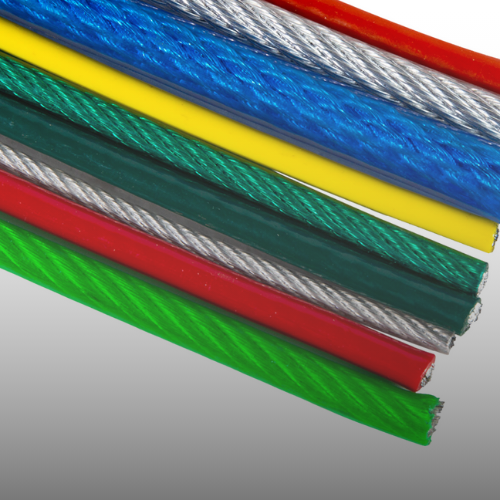
The reality: diameter is only one part of the strength equation. Wire grade, construction, and core type all affect a rope’s actual Minimum Breaking Load and suitability for an application at least as much as diameter does — a correctly specified rope at the right diameter, grade, and construction for its application will consistently outperform an oversized rope chosen without checking those other three variables. The risk: buyers who over-diameter to “be safe” sometimes still end up with a rope that’s wrong for the sheave size or bending cycle of their equipment, creating a new problem while solving an imaginary one.
Myth 2: "All wire rope is basically the same, so buy on price."
Why the myth persists: two ropes of the same diameter can look genuinely identical to the naked eye.
The reality: they can differ significantly in wire quality, consistency of manufacturing, and whether they’re actually tested and certified to the standard they claim. A rope from an uncertified source may carry no verifiable breaking load data at all — which means the “safety factor” calculated against it is meaningless, because nobody actually confirmed what the rope’s true breaking load is. The risk: the cost difference between certified and uncertified rope is small next to the cost of a failure, both in direct terms and in liability if an uncertified rope is later shown to be the cause.
Myth 3: "Galvanized rope doesn't need protection — it won't rust."
Why the myth persists: galvanizing visibly and genuinely does slow corrosion, so the assumption that it eliminates the problem entirely feels reasonable.
The reality: zinc coating protects the outer wires from atmospheric corrosion significantly, but it does not eliminate the need for lubrication. Internal wires and the core still need lubrication to resist corrosion and reduce internal friction between wires as the rope bends — galvanizing protects the outside; lubrication protects the inside. The risk: treating a galvanized rope as maintenance-free shortens its service life considerably, often without any external sign until the rope is well into its wear cycle.
Myth 4: "If a rope looks fine on the outside, it's fine."
Why the myth persists: a visual glance is fast, and most of the time, a badly worn rope does look visibly bad.
The reality: some of the most serious wire rope damage is invisible from the outside — internal wire breaks, core degradation, and internal corrosion can all develop while the outer surface looks completely normal. This is exactly why proper inspection follows defined discard criteria — checking broken wire counts over a specified length, diameter reduction, and other measurable indicators — rather than a visual impression. The risk: a rope that “looks fine” but has crossed its discard criteria internally can fail with no external warning at all.
Myth 5: "Once a rope is installed, it doesn't need any maintenance."
Why the myth persists: a wire rope is a passive, static-looking product once it’s on the drum, so it doesn’t visibly demand attention the way moving machinery does.
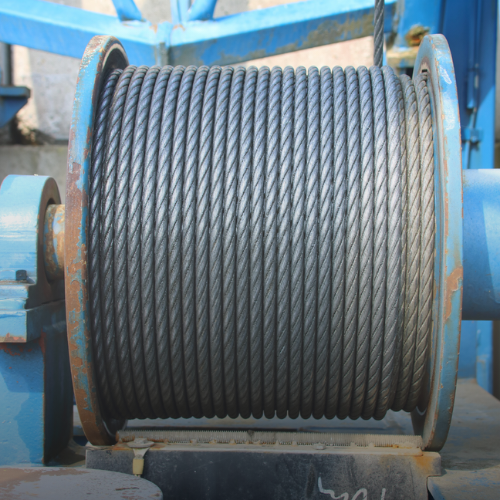
The reality: regular lubrication and periodic inspection can extend a wire rope’s service life dramatically compared to an unmaintained rope of the same specification, running in the same conditions. Maintenance is not an optional extra — it’s the single biggest factor within a user’s control for how long a rope actually lasts. The risk: skipping maintenance doesn’t just shorten rope life; it also removes the early-warning signs that inspection is designed to catch, so problems tend to surface as failures rather than as flagged replacements.
Every one of these myths gets tested against reality the moment a rope is put into real service. Working with a genuine wire rope manufacturer in India that provides verified test certificates, correct construction guidance, and clear maintenance recommendations removes the guesswork these myths tend to fill.
FAQ
Q: What’s the fastest way to check if a supplier’s rope is genuinely certified? Ask for the test certificate for the specific batch you’re buying, not a generic product brochure. A certified manufacturer can provide breaking load and dimensional test data traceable to your order.
Q: How often should a wire rope actually be inspected? Frequency depends on the application and applicable code, but as general practice, critical lifting ropes should be visually checked before every shift, with a more thorough, documented inspection at intervals set by the equipment’s governing standard.
Q: Is a slightly rusty-looking rope automatically unsafe? Not automatically — surface discoloration alone doesn’t mean a rope has failed its discard criteria. But it’s a signal to inspect more closely (broken wires, pitting depth, diameter loss) rather than to ignore or to condemn without checking