Order the wrong lay direction, and a wire rope can work fine for weeks — then start unwinding itself off the drum, or wear unevenly against a sheave, for no reason anyone on site can immediately explain. Lay direction is one of the least understood specifications on a wire rope order, and one of the easiest to get wrong when a replacement is ordered on diameter and length alone.
What "lay direction" describes
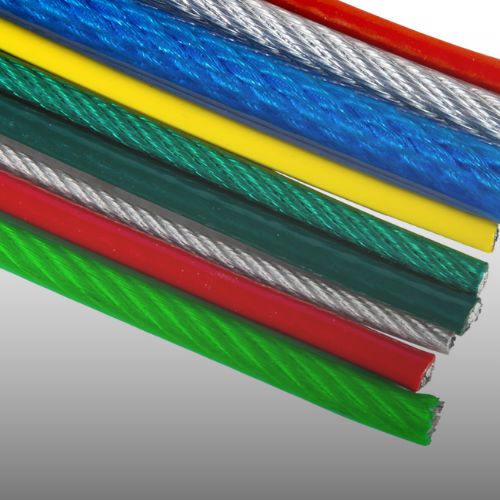
Lay direction describes which way the strands spiral around the rope’s core as you look along its length. In a right-hand lay (RHL) rope, the strands spiral away from you in a clockwise direction — the same direction as a standard right-hand screw thread. In a left-hand lay (LHL) rope, they spiral counter-clockwise. Right-hand lay is the more commonly stocked default; left-hand lay is specified when the equipment design specifically requires it.
How to identify lay direction on an existing rope
Look along the rope from one end: if the strands appear to spiral away from you in a clockwise direction — matching a standard right-hand screw thread — it’s right-hand lay. If they spiral counter-clockwise, it’s left-hand lay. When ordering a replacement, it’s safer to confirm this visually against the rope coming off the equipment, or check the equipment’s manual, rather than assume the standard right-hand lay is correct.
Regular lay vs lang lay — a related but separate choice
Separately from right/left hand, rope is also described as regular lay or lang lay. In regular lay, the wires within each strand run in the opposite direction to the strand lay — this produces a rope that resists kinking and is easier to handle, which is why it’s the default choice for most general applications, including most crane and hoist duty. In lang lay, the wires run the same direction as the strand lay. This gives noticeably better fatigue and wear resistance — the outer wires present a longer wearing surface to the sheave — at the cost of a greater tendency to untwist under load if the ends aren’t properly secured. Mining, haulage, and some drilling applications specifically call for lang lay’s wear advantage; most standard cranes and hoists specify regular lay unless told otherwise.
Alternate lay: a less common third option
A third, less frequently specified option is alternate lay, where strands alternate between regular and lang lay pattern around the same rope. It’s used in specific applications seeking a compromise between regular lay’s handling stability and lang lay’s wear resistance, though it remains far less common than either standard type and is typically specified only where an equipment manufacturer calls for it explicitly.
Why matching lay direction to the drum matters
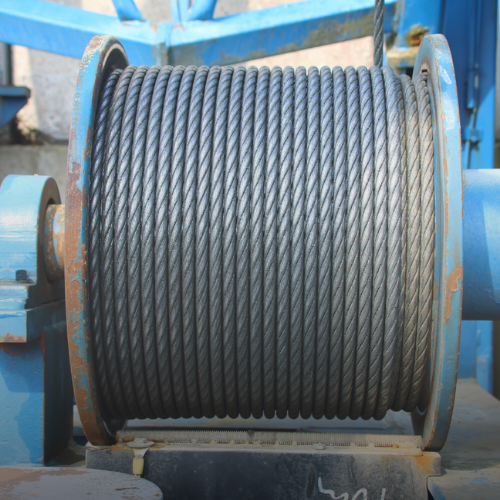
Wire rope drums are grooved to wind rope in a specific direction. Installing a rope with the wrong lay direction for its drum can cause the rope to wind unevenly, crush against itself layer over layer, or develop a tendency to rotate under load — which in turn accelerates wear and, in serious cases, contributes to premature failure. This is precisely why the lay direction specified on a replacement rope should always match the original, not just the diameter and construction.
The torque-balance connection — why some ropes are labelled "non-rotating"
Lay direction is also the underlying principle behind rotation-resistant and non-rotating wire ropes. These constructions deliberately combine layers laid in opposite directions so that the torque each layer generates under load cancels out the torque from the layer beneath it, keeping the rope stable instead of spinning under a suspended load. It’s the same lay-direction physics discussed above, engineered deliberately rather than left to chance — which is why substituting a standard-lay rope where a non-rotating construction was specified can reintroduce exactly the rotation problem the original design was built to avoid.
A simple rule for replacement orders
If you’re replacing an existing wire rope, always specify the same lay direction as the rope coming off — don’t assume it’s standard right-hand lay. If you’re specifying rope for a new installation, the equipment manufacturer’s manual will state the required lay direction and lay type; follow it exactly rather than defaulting to whatever is easiest to source.
Bedmutha manufactures SURE wire ropes in right-hand and left-hand lay, and in regular, lang, and non-rotating configurations, so replacement orders can be matched exactly to what your equipment requires.
FAQ
Q: How can I tell what lay direction my current rope is? Look along the rope: if the strands spiral away from you clockwise, like a standard screw thread, it’s right-hand lay; counter-clockwise is left-hand lay. When in doubt, check the equipment manual or send a sample photo to your supplier.
Q: Is lang lay rope less safe than regular lay? No — it’s suited to different conditions. Lang lay offers better fatigue and abrasion resistance in applications like mining and haulage, but requires the rope ends to be properly secured, since it has more tendency to untwist. It should be specified where the application calls for it, not avoided outright.
Q: Why do some cranes specifically require non-rotating rope? Because a load hanging freely on a single-fall rope will spin under any lay-direction rope that isn’t torque-balanced. Non-rotating construction cancels that torque by design, which is essential for tower cranes and other single-line lifting where load spin is unacceptable.