For years, “imported” carried an assumption of better quality in industrial buying decisions. With wire rope, that assumption is worth re-examining — because today, it often costs buyers more, not less, without delivering a quality advantage that actually exists on paper.
Quality: the gap has closed, on paper and in practice
A wire rope certified to IS 2266 in India is held to a standard the Bureau of Indian Standards itself designates as equivalent to the international ISO 2408 standard. That means a BIS-certified Indian manufacturer’s rope is tested to comparable breaking load, dimensional, and construction requirements as an imported one carrying ISO 2408 or an equivalent national standard. The real quality differentiator today isn’t country of origin — it’s whether the specific manufacturer, wherever they’re based, actually tests and certifies every batch. An uncertified imported rope is a bigger risk than a certified Indian one, not a smaller one, regardless of where either was made.
Landed cost: the number that surprises buyers
Lead time: weeks versus months
This is where the gap is starkest. An imported wire rope order typically involves production scheduling abroad, international shipping, and customs clearance — routinely stretching to two or three months or more from order to delivery, longer still if a shipment is delayed or held at customs. An Indian manufacturer with in-house wire production and stock inventory can often deliver standard constructions in days to a few weeks, and custom specifications in a fraction of the time an import takes. For any project running against a schedule — and most industrial projects are — that difference alone can decide which supplier gets the order.
After-sales support: proximity is a real advantage, not a soft one
When a rope needs technical clarification, a replacement matched to an existing installation, or warranty support, dealing with a domestic manufacturer means a phone call and, if needed, a same-country visit. With an imported rope, the same query can mean emails across time zones, language friction, and shipping delays for even a minor replacement length. For equipment that can’t afford extended downtime — a crane on an active site, a mine hoist, a marine winch — this matters as much as the rope specification itself, and it’s frequently underweighted in the initial purchase decision.
Traceability: easier to verify when the manufacturer is a phone call away
A batch test certificate is only as useful as a buyer’s ability to query it. With a domestic manufacturer, following up on a specific batch number, requesting an additional test report, or getting a technical explanation of a specification is straightforward. With an overseas supplier, the same follow-up can take days to get a response, if it comes at all — particularly for a smaller order that isn’t a priority account for the exporter.
When importing still makes sense
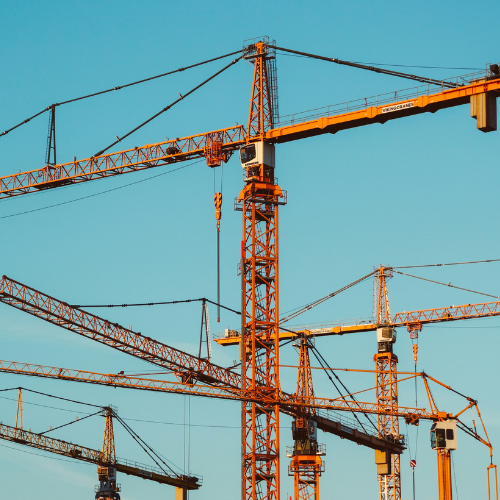
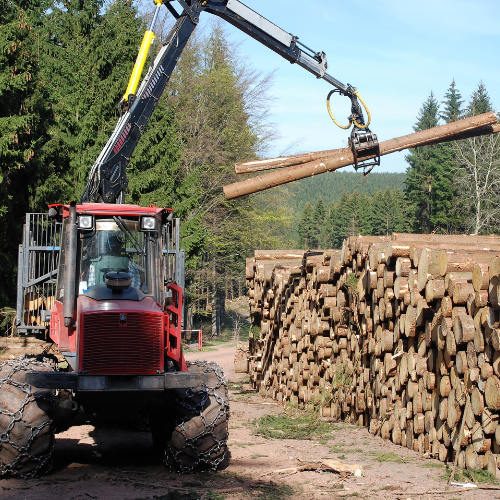
There are genuine cases where importing remains the right call — a highly specialized construction, an unusual coating, or a coating combination genuinely unavailable domestically, for instance. But for the large majority of crane, elevator, mining, marine, and general engineering applications, a certified Indian manufacturer now matches import quality while removing the cost, time, and support disadvantages that come with buying from overseas.
Bedmutha is a wire rope manufacturer in India producing IS 2266-certified SURE wire ropes with in-house wire production, so buyers get import-equivalent quality with domestic lead times and support.
FAQ
Q: Is imported wire rope always higher quality than Indian-made rope? Not automatically. Quality depends on whether the specific manufacturer tests and certifies each batch to a recognized standard, not on country of origin. A certified Indian manufacturer can match the quality of an imported rope while offering shorter lead times and easier after-sales support.
Q: What should I ask an overseas supplier before ordering, if I do choose to import? Ask for batch-specific test certificates (not generic datasheets), confirm total landed cost including duty, freight and insurance, and get a written delivery timeline — imported orders frequently run longer than initially quoted.
Q: Does IS 2266 certification mean the same thing as an international certification? IS 2266 is formally recorded by the Bureau of Indian Standards as equivalent to ISO 2408, the international standard for general-purpose steel wire ropes — so an IS 2266-certified rope is tested to comparable requirements as one certified to its international counterpart.