Wire ropes are among the most safety‑critical components used across infrastructure, construction, mining, oil & gas, marine, elevators, and heavy engineering. Yet, many operational failures, excessive maintenance costs, and safety incidents can be traced back to one root cause misinterpretation of wire rope specifications and labels.
A wire rope is not a commodity item. Every marking on a wire rope label represents a deliberate engineering decision that determines how the rope behaves under load, how long it lasts, and how safely it performs. For engineers, EPC contractors, procurement managers, and safety professionals, the ability to correctly read wire rope specifications is a core competency.
When sourcing products from a trusted manufacturer of wire ropes in India, understanding specifications allows buyers to evaluate quality objectively, compare offers accurately, and select the most appropriate rope for each application. This comprehensive guide explains every aspect of wire rope specifications and labels in a clear, practical, and professional manner.
Why Understanding Wire Rope Specifications Is Critical
Wire rope specifications define the mechanical, structural, and environmental capabilities of the rope. These specifications ensure that the rope performs safely within its intended limits.
Failure to interpret specifications correctly can result in:
- Rope failure under load
- Excessive wear of sheaves and drums
- Reduced fatigue life
- Increased downtime and replacement costs
- Safety hazards to personnel
Experienced procurement teams working with a reputable manufacturer of wire ropes in India treat specification review as a mandatory technical step rather than a formality.
Explore how specifications differ across applications on the Wire Ropes page.
What Information Appears on a Wire Rope Label or Certificate
A standard wire rope label or test certificate typically includes:
- Nominal diameter
- Rope construction (strand and wire configuration)
- Core type
- Lay direction and lay type
- Tensile grade of wires
- Minimum breaking load (MBL)
- Surface finish or coating
- Manufacturing standard
- Batch, heat, or traceability number
Each parameter must be read together not in isolation to fully understand rope performance.




Understanding Wire Rope Diameter in Detail
Wire rope diameter is the nominal outside diameter measured across the widest section of the rope under no load. This value directly affects strength, bending performance, and equipment compatibility.
Why Diameter Accuracy Matters
- Determines load‑bearing capacity
- Affects fatigue life when bending over sheaves
- Ensures compatibility with drums and grooves
Incorrect diameter selection can accelerate wear in Crane Wire Ropes and compromise ride comfort in Elevator Wire Ropes.
Decoding Wire Rope Construction (Strands × Wires)
Wire rope construction describes how many strands make up the rope and how many wires form each strand (e.g., 6×19, 6×36, 8×19).
How Construction Affects Performance
- More wires → higher flexibility and fatigue resistance
- Fewer, thicker wires → better abrasion resistance
- Multi‑strand designs → improved load distribution
Construction selection varies by application:
- Abrasion‑intensive environments – Mining Wire Ropes
- Continuous hauling – Haulage Wire Ropes
- Structural systems – Suspension Bridge Wire Ropes
Understanding Core Types: FC, WSC, and IWRC
The core forms the foundation of a wire rope and supports the outer strands.
Fiber Core (FC)
- High flexibility
- Good shock absorption
- Lower heat and crush resistance
Wire Strand Core (WSC)
- Improved stability
- Moderate strength
Independent Wire Rope Core (IWRC)
- Highest strength
- Superior crush resistance
- Preferred for heavy‑duty lifting
Core selection is especially critical in Oil and Gas Wire Ropes and General Engineering Wire Ropes.
Lay Direction and Lay Type Explained
Lay direction refers to the direction strands are wound around the core, while lay type defines the relationship between wire and strand lay.
Regular Lay
- Stable under load
- Easier inspection
- Widely used in lifting
Lang Lay
- Higher abrasion resistance
- Better flexibility
- Requires careful handling
Incorrect lay selection can lead to rotation issues in Non‑Rotating Wire Ropes and wear problems in Aerial Wire Ropes.
Tensile Grade and Wire Strength
Tensile grade indicates the strength level of individual wires. Higher grades increase breaking strength but must be matched with correct construction to avoid brittleness.
Professional steel wire rope manufacturers in India design ropes where tensile grade, flexibility, and fatigue resistance are balanced for the application.
Minimum Breaking Load (MBL) and Safety Factors
MBL represents the maximum load the rope can withstand during destructive testing.
Important considerations:
- Working Load Limit (WLL) is derived from MBL
- Safety factors are mandatory
- MBL should never be approached in service
MBL interpretation is critical for Slings & Fittings and lifting applications.
Surface Finish and Coating Identification
Surface finish affects corrosion resistance and environmental durability.
Common Options
- Bright (uncoated)
- Galvanized
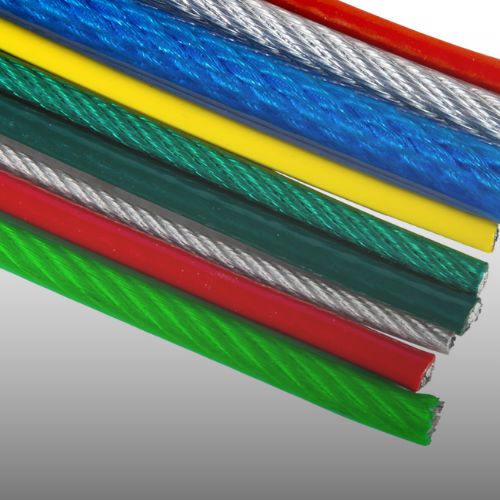
- PVC / HDPE coated
Coated ropes are essential for Marine and Fishing Wire Ropes and Barrier Wire Ropes.
Manufacturing Standards and Compliance Codes
Specifications often reference IS, EN, DIN, or ASTM standards.
Standards define:
- Dimensional tolerances
- Test procedures
- Safety requirements
Verify compliance through the Quality Assurance System and Certificates pages.
Traceability: Batch Numbers and Heat Numbers
Traceability ensures material accountability and supports audits, investigations, and lifecycle tracking especially critical in infrastructure projects.
Common Mistakes When Reading Wire Rope Specifications
- Ignoring core type
- Overlooking lay direction
- Selecting based only on diameter
- Skipping certification review
- Comparing prices without matching specifications
How Proper Specification Reading Improves Procurement Outcomes
Correct interpretation enables:
- Accurate supplier comparison
- Reduced downtime
- Lower lifecycle cost
- Improved safety compliance
Working closely with a reliable manufacturer of wire ropes in India ensures technical clarity and long‑term value.
Frequently Asked Questions (FAQs)
Why do wire rope labels look complex?
They compress multiple engineering parameters into a standardized format.
Can two ropes with the same diameter perform differently?
Yes, construction, core, and material quality cause major differences.
Is MBL the same as working load?
No. Working load is a fraction of MBL.
Are coated ropes always better?
Only when environmental exposure demands corrosion protection.
Where can I learn more about selection and care?
Visit the Blogs section for expert guidance.
Conclusion
Mastering wire rope specifications and labels is essential for safe, efficient, and cost‑effective operations. Every marking on a rope communicates critical performance information that must be understood before purchase and use.